Showing posts with label hunting. Show all posts

03 March 2011

The Devil Hounds of Kenya: Canine Persistence Hunting

Several years ago I was emailed these images from a 1958 Adventure magazine. Besides being solely about my favorite breed, the Rhodesian Ridgeback, the article was the first one where I got to see photos of dogs being used to hunt large game and the first time I’ve read about dogs hunting in a persistence fashion.

“Their teamwork is instinctive. One hound will dart out of the pack, put on a burst of speed, outdistance his confreres, and overhaul the target. When he draws near the fleeing animal, the ridgeback alternatingly snarls and snaps at the victim’s legs, occasionally coming off with a piece of flesh as a reward for his intrepidity. When he tires, another of the dogs shoots out, replacing the lead animal who drops back with the rest of the pack. In this way the prey has to keep up a bristling pace to stay ahead, and this can’t be done.”
Imagine that instead of dogs we have athletic human hunters with spears. Sure the speed of the dog is one of its attributes, but the throw of a projectile can cover significant ground in a short amount of time even if the thrower cannot. A near hit spear throw would startle prey similar to the snapping of a dog’s jaws, forcing it to run faster and further. That hunter goes to retrieve his spear while the others keep after the prey at a decent pace. The next hunter sprints ahead and makes his throw when in range and so forth it goes until the prey is too tired to dodge or run away.

So while there are some out there who may argue against the theory we evolved as persistence hunters, I think there is a good chance we did it. I am sure our ancestors did, or at least tried, everything to survive. Maybe this endurance style of hunting is not the most efficient or healthy method to mimic for optimum fitness, but I am sure no type of hunting was ever done with fitness in mind. It was all about securing food and simply what worked, worked. So I’m thinking if you want to keep your endurance training fairly paleo you would follow these general guidelines:

  • Don’t Do It Every Day – Even if we did evolve as persistence hunters, we sure as hell didn’t do it every day. Maybe once or twice a week?
  • Ditch The Shoes – Although barefoot is ideal, minimalist shoes work well and protect your feet from that random piece of glass or prickly leaf.
  • Trail Run – From dodging roots to tromping through mud, you are bound to get a better workout on this uneven terrain. And your feet and knees will enjoy getting away from the hard pounding that comes with running on roads or sidewalks.
  • Mix In Sprints – I usually try to sprint up any inclines and would rather randomly pick an object ahead of me and try to beat the dogs to it. I must say that the times I felt most alive have been when I am sprinting along a dense trail with the dogs at my heels.
  • Take A Break – Periodically stop, catch your breath, and take in your surroundings. Just zooming through the woods isn’t enough for me. I like to experience the tranquility or take in an amazing view. If you’ve got dogs running with you, let them stop and sniff.
  • Bring Something Back – Grab something big and drag it. Toss a big rock or log. Mix in some squats and lunges. If I were on a trail that looped, I would sometimes grab a log and carry it on my shoulders until I worked my way back to that same spot where I would put it back.
Maybe I just had too good of a time running the ultras that I did and deep down I am looking for anything to justify that experience. My knee injury aside, I had planned on not running any more endurance races for a while. The main reason had more to do with the dogs. Often taking the dogs with me to a race was unfeasible, as rarely did I have anyone go with me. The question “want to go camping several nights, no nearby showers, and watch the dogs for me while I run 6 to 12 hours?” never drew the crowd I was hoping. Instead I like the idea of going backpacking with the dogs, somewhere I can bring them, still get to be out in the wilderness, and get a great workout.

11 January 2011

Hunted, Roasted Rabbit

Sunday morning I drove to my good friend Bob’s farm. The temperature was in the low 20s with a decent wind. After taking some practice shots with the 12 and 20 gauge shotguns we went off to hunt rabbits. Although I was gung-ho about hunting I had a few reservations. First, the shotguns were very simple and had no safety switch. Second, I had never hunted, or shot rather, moving on foot in a group. Ultimately I did not want to pull a Dick Cheney.

I walked into the field with enough shells in my pocket to wipe out several generations of rabbits or take over a small country, whichever came first. Not having dogs, we beat through the brush ourselves. Bob periodically warned me we may not actually see anything. I would respond that I realized that a part of the hunt involves locating the prey. Hell, I was completely satisfied braving the elements, tramping through brush with a gun in hand. I can see the benefit of having a dog root out the rabbits for you. Besides not having to walk through brush and the dog having a heightened sense of smell, it gives the hunter more resources that can be devoted to having the gun ready to shoot.

About halfway through our walk we saw our first rabbit. Neither of us had a good shot at it so it got away. It was the largest wild rabbit either of us had seen. We did our best to track the prints in the snow, but to no avail. Not long after that we had another rabbit appear and that one did not get away. I managed a nice, clean head shot and was quite impressed with myself.

Straight out of Fargo
We hunted longer but saw nothing else. With the wind biting at that point, we grabbed our kill and went back to the house.


Butcher's Board
Skinned
Bob’s father was very kind and did the gutting and skinning for me. This is something I have full intentions of learning, I just did not want to rough up the only rabbit. We went off to wash the final product and came back to the barn cats having a feast with the entrails. Luckily I had already saved the heart and liver for myself!

Waste Not
Once home I further washed any hair off, wrapped it in bacon and roasted. I expected the taste to be gamier, but it turned out to be rather mild and quite delectable. I think next time, hoping there will be a next time, I will try a stew. I must admit that there is something uniquely satisfying about killing and cooking your own food.
  

Heart and liver fried in bacon fat = Amazing!

05 January 2011

A Fasted Perspective on Hunting

Yesterday I had a breakfast that included 5 eggs, a thick strip of bacon, and beef liver. A few hours later I ate approximately ½# of ground beef I had cooked from the night before. I ate everything in a 3 hour window (7-10am) with intentions of fasting until breakfast this morning. Ultimately I went out for a small bite to eat for dinner with my local dairy farmer, but that is neither here nor there. What I write about now is when I came home after work before I had the aforementioned dinner.

Steak and Eggs
Over the holiday weekend I picked up some venison from my uncle and thawed it out after I returned home from my New Year adventure. Using my new Cutco Butcher Knife I started cutting one of the huge legs of meat in to meal sized portions for the dogs. Upon coming home from work and putting the venison shown above in their food bowls (in addition to an egg) my hunger became more apparent than ever. I wanted all that meat. It was at that moment I wished I had a larger chest freezer and I had venison all year round. The breakfast and lunch I had was nothing without eating a thick venison steak such as the ones staring back at me. Any qualms I’ve mentioned having with the taking of the life of an animal seemed to be thrown out the window.

After seconds of contemplation I fed the dogs these beautiful steaks and told myself I will become a hunter. I will hunt to feed both myself and the dogs. I brought up this realization at dinner with my good friend Bob of Nice Farms Creamery and it looks like Sunday we will go rabbit hunting on his property. With it being winter and things fairly slow around the farm we should be able to protect his valuable pasture from rabbits, saving it for his dairy cows.

It looks like I will become a hunter sooner rather than later!

09 December 2010

Coyotes and Greyhounds, is it Dog Fighting?

First, to soften you up, check out The Daily Coyote. Amazing photos of a domesticated coyote. I stumbled across the book about a year ago and very much enjoyed the photos in it.

Now on to the hunt. The NY Times back in April had an article with the following title: Coyote vs. Greyhound: The Battle Lines Are Drawn.

I've always thought Greyhounds looked like emaciated rats. Maybe that is just how they are bred for conformation and racing purposes. Most of the Greyhounds I have met have been rescued and were former racers. I think the ones shown in this article, as well as the mixed breeds, look far healthier and fitter than the ones I am used to.
Shaman and a Greyhound
The Oklahoma gentleman interviewed calls them calm and gentle in addition to being efficient killers. He argues that hunting coyotes is exactly what they were born and bred to do, what they live for. According to the AKC, the Greyhound is an ancient breed seen on Egyptian tombs are far back as 2900 B.C. “It was used on practically all kinds of game from deer, stags, foxes and such, but the hare is the Greyhound’s natural quarry.“ The history of the breed goes further to say they were brought over to the Americas by the Spanish and used to intimidate and punish the Indians. And George Washington is known to have traveled with a large greyhound named Azor during the American Revolution. So at least according to this brief history, it looks like the Greyhound has been quite the versatile hunting dog.

Although coyotes help control rodent populations and are important part of the ecosystem, they are considered a major pest by ranchers whose livestock are killed by them. The article goes on to state that in 2008 the federal Agriculture Department killed nearly 90,000 coyotes in 2008 by the use of traps, aerial gunning and bait filled with poisonous gas.

So if coyotes are pests, why not let them be hunted with dogs? The Chairwoman of the Washington Fish and Wildlife Commission Miranda Wecker thinks this is simply dogs ripping apart other dogs and should be likened to dog fighting rather than hunting. So is this man from Oklahoma more of a George Washington or a Michael Vick character?

The hunter continues with “If you didn't let them run, you would be denying what they were bred to do.” I fully agree with this. However they could hunt other things and not deny them the chase. Watching my two run after a deer, rabbit, or squirrel is a beautiful sight. And they come back with a twinkle in their eyes screaming “Best. Thing. Ever.”

I am torn. Since I was a little kid I always threw dogs in the same group as coyotes, foxes and wolves. So the child in me says this is dog fighting. However, having seen my dogs before, during and after a chase, I understand why this hunter does not see anything wrong with what he is doing.

The article mentions hunters often leave the coyote carcasses behind. If they are an overpopulated pest, I am possibly okay with this, however if I am going to hunt something I want to use what I've killed. I would not go so far as to feed the dogs coyote meat... I have major concerns about that, even though wolves are known to kill and eat coyotes from time to time. I am thinking the pelt could be used for many things, and I'd be willing to try to coyote meat.

I am going to side with the hunter on this one. Although I am 150% against dog fighting as a sport, I would be okay hunting coyotes with my dogs. When I get home I'll ask them if they would like to take a trip to Oklahoma.


01 December 2010

Meditations on Hunting

One of my most favorite reads is a book called Meditations on Hunting by Spanish philosopher José Ortega y Gasset. At least once a year I have Enoch Pratt send me down a copy of the first translation of the work. Although I've been tempted to order the newer version, I have fallen in love with this older book and its penciled hunting illustrations between chapters. The book does not go into the details of hunting, but more into the larger topics of why we hunt today when we do not need to hunt to survive and how for Paleolithic man hunting was his occupation. The book also touches on the domestication of the modern dog to the scarcity of game and how it different classes viewed the hunt.

Here is an excerpt of the book from the chapter Suddenly We Hear The Sound of Barking:
Suddenly a dog's bark shatters the prevailing silence. This bark is not merely a point of noise that appears at a spot on the mountain and remains there - rather it seems to extend rapidly in a line. We hear, and almost see, the barking run loose, weaving swiftly through space like some erratic star. In an instant the barking runs over the plains like a lightning bolt. Many different voices follow it, advancing in the same way. The game is seen, raised in dizzying flight like wind on the wind. The entire countryside is polarized, seemingly magnetized. The fear of the pursued animal is like a vacuum into which everything in the environs is thrown. Beaters, dogs, small game, everything heads that way, and even the birds, frightened, fly rapidly in that direction. The fear which causes the beast to flee absorbs the entire countryside, suctions it, carries it racing along behind, and even the hunter, outwardly quiet, is inwardly moved, his heart racing wildly. The beast's fear... but is it so certain that the beast is afraid? At least his fear is not at all like fear in man. In the animal fear is permanent; it is his way of life, his occupation. We are talking, then, about a professional fear, and when something becomes professionalized it is quite different. Therefore, while fear makes man slow of mind and movement, it carries the faculties of the beast to their greatest performance. Animal life culminates in fear. Skillfully the stag eludes the obstacle; with millimetric precision he threads swiftly through the gap between two tree trunks. Nose to the wind, neck arched, he lets swing free the regal antlery which balances his acrobatics, as the pole does for the tightrope walker. He gains distance with the speed of a meteor. His hoofs hardly touch the ground; rather, as Nietzsche says of the dancer, he limits himself to acknowledging it with the point of his foot; acknowledging it in order to eliminate it, in order to leave it behind. Suddenly, on the spine of a low ridge the stag appears to the hunter; he sees him cut across the sky with the elegant grace of a constellation, launched there by the springs of his slender extremities. The leap of the roe dear or stag - and even more of certain antelopes - is perhaps the most beautiful event that occurs in Nature. He lands again at a distance and accelerates his flight, because the snorting dogs are close on his heels-the dogs, abettors of all this vertigo, that have transmitted their delightful frenzy to the mountain and now, in pursuit of the game, tongues hanging out, bodies stretched to their full length, gallop obsessed-hound, mastiff, beagle, greyhound.
Although this is a translation from Spanish, it is still breathtaking. Most of the book is written in this manner, quasi-philosophical musings from well thought out ideas. He also speaks of our evolution from a hunter-gatherer people without skirting around any of the biblical bull. Also in this chapter:
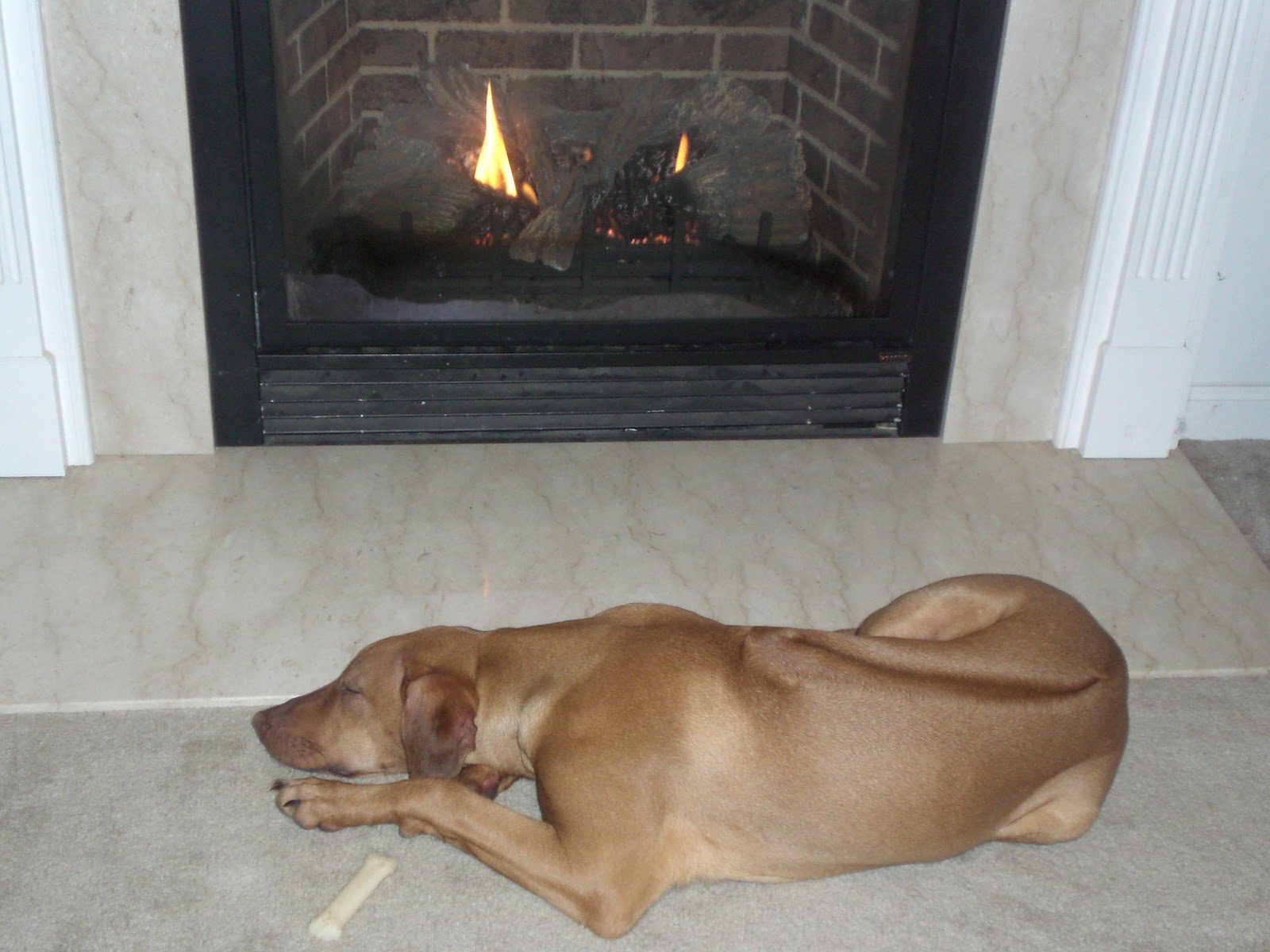
The dog enters domesticity toward the end of the Paleolithic Age, in the later Capsian culture, contemporaneous with the Solutrean-Magdalenian. Its first documented appearance in found in Spain, in the Cave of the Old Woman of Alpera. It seems that it was not yet use in hunting. This happens a little later, at the beginning of the Neolithic Age, in the period called Maglemosian. The dog was, then, the first domestic animal. It is not even certain that man domesticated it; certain evidence suggests that the dog spontaneously approached man. Doubtless the leavings of food attracted him. Perhaps, even more than food, the dog found something else attractive in being close to man: warmth. It is enough to see the happiness of today's dog when he is beside a fire. The coals intoxicate him, and do not forget that man is, first and foremost, the animal with fire in his fist. The manipulation of fire, the success of having it at his disposal, was man's first physical discovery and the root of all the others. Before anything else, he dominated flame; he arises in Nature as the flammiferous beat.
Domesticated by fire?
I think I can accept the advent of domesticated dogs occurred through our ancestor's use of fire. I am sure the people that managed to befriend these canine beasts had many other benefits than simply a hunting partner. They had the protection and intimidation abilities, and maybe a few found the companionship enjoyable. And I am sure that the scraps mentioned above are similar to the scraps my hounds get, as I cannot physically eat every part of the animal. But going back to fire, I've taken Shaman to countless bonfires and he seems to have a natural inclination to hang by the fire. Now he never tries to jump over the flame like I've often done, he does keep his distance. But I have seen the intoxication mentioned above, staring into the flames absorbed.

The chapter goes on to touch topics like MovNat's Zoo Human concept. I am sure no one will accept the charge of being degenerate, but Ortega y Gasset presents his case like this:

From the zoological point of view, the domesticated animal is a degenerate one, as is man himself. In the artificial existence which man offers, the beast loses not a few of his instincts, even though he refines others which man needs and tries to select in breeding. The space left in the animal’s life by the loss of these instincts is filled by teaching and training. But generally this is something that is only trivially and superficially understood. Through training man introduces certain forms of human conduct in the animal. That is, domestication partially de-animalizes and partially humanizes the beast. This is to say that the domestic animal is an intermediate reality between the pure animal and man, which, in turn, is to say that something like reason operates in the domestic animal. That is what has never been pointed out, although it is completely obvious.

Cyprus: U Degenerate!   Prynn: Yo Momma Degenerate!
Later in the book the topic of hunting as an escape, a vacation from the human condition are delved into.

Man cannot re-enter Nature except by temporarily rehabilitating that part of himself which is still an animal. And this, in turn, can be achieved only by placing himself in relation to another animal. But there is no animal, pure animal, other than the wild one, and the relationship with him is the hunt.
Only the wild animal is properly in the countryside, not just on top of it, simply having it in view. If we want to enjoy that intense pure happiness which is a “return to Nature,” we have to seek the company of the surly beast, descend to his level, feel emulation toward him, pursue him. This subtle rite is the hunt.


Simply put, we should embrace our hunting ancestors and grab our gun or bow or spear and hunt (and do not forget your degenerate wolf!). Now I won't go so far as to say find you a club and you will be able to take any woman back to your cave. But maybe we should step out of our cubicles with their artificial light and give hunting a shot.